Let’s be real for a second—if you’ve ever had to coordinate a shipping dock loading/unloading at 2 a.m., or raced to fix a stuck industrial door that’s holding up a whole manufacturing line, you’ve probably stared at that box of wires labeled “industrial door control box” and thought, “Wait… can I just plug this in myself, or do I need to call a pro?” As someone who’s sold these bad boys for the last seven years, I hear that question nonstop. And honestly? It’s not a yes/no answer. It depends on a bunch of stuff most folks don’t think about until they’re staring at a door that won’t budge and a $1,200 repair bill from an electrician who didn’t need to be there. Industrial Door Control Box
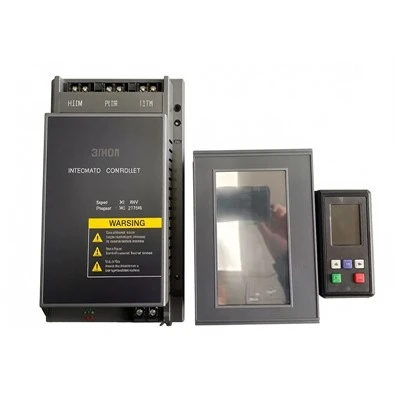
First, let’s break down what an industrial door control box actually does, because that’s where a lot of the confusion starts. This isn’t your tiny garage door opener remote. This is the brain of a 10-ton sectional door, a high-speed roll-up door that moves 5 feet per second, or a hydraulic dock leveler that syncs with the door to keep your warehouse safe and OSHA-compliant. It’s got to handle high-voltage power (most run 240V or 480V—way more than your home outlets), sync with safety sensors, photo eyes, bottom-edge beams that stop the door if a forklift or a kid runs under it, and sometimes even connect to your building’s entire access control system. Mess that up, and you’re looking at a door that slams shut, fries a motor, or even causes a shock hazard.
Now, I see a lot of small business owners try to wing this themselves. They’ll watch a TikTok “how to wire an industrial control box” (side note: don’t trust TikTok for this—most of those guys are wiring home doors, not 30-foot metal behemoths) and grab a drill. Let’s talk about why that usually goes wrong. For starters, industrial doors aren’t static. They’re used 50, 100, even 200 times a day. That’s way more cycle time than a residential door, so the control box’s wiring has to be able to handle constant vibration from the door moving. A weekend warrior will strip a wire just trying to cram it into the wrong terminal, and six months later, that vibration will shake it loose. Suddenly your door stops mid-cycle and you’re paying overtime for a tech to come fix it at 7 a.m. on a Monday.
Then there’s the OSHA thing. If you’ve got a manufacturing facility, or even a warehouse, OSHA has super specific rules for power-operated doors. The control box isn’t just a convenience—it’s part of the safety system. If you wire it wrong, and a safety sensor fails because of a bad connection, OSHA can fine you up to $15,625 per serious violation. I’ve had a customer tell me he tried to wire it himself, got a $12k fine, and then called us begging for a pro to fix his mess. That’s a way bigger hit than paying an installation fee upfront.
But wait—before you go, “Fine, I’ll just call a pro every time,” there are cases where you can do it yourself, if you know what you’re doing. Let’s say you’re a facilities manager at a small shop that has a basic, low-cycle industrial door—like a loading door that only opens a couple times a day, no fancy syncing to dock levelers, just a control box that runs the door and safety sensors. If you’ve got a journeyman electrician on your staff, and you’ve done this type of high-voltage wiring before, maybe it’s doable. But here’s the catch: even then, you need to test it properly. Most people forget to do a “cycle test” where you run the door 50 times in a row to check for loose wires, overheating terminals, or sensor alignment issues. If you skip that, you might think it’s fine, then have a door fail during a busy shift.
And let’s talk about what professional installation actually includes, because that’s not just “plugging in the wires.” When our certified techs show up, they don’t just hook up the control box. They do a load test on the motor to make sure the control box is supplying the right voltage (too high and you fry the motor in a week, too low and the door moves too slow). They calibrate the safety edges and photo eyes so they actually work—half-assed calibration means a photo eye that thinks a forklift is “nothing” and lets the door close, which is a lawsuit waiting to happen. They also make sure the control box is grounded correctly, which prevents electrical surges from lightning or power spikes that would destroy the whole unit. I’ve had customers try to skip grounding and get a surge that ruined their control box, which cost them $800 for a new unit plus lost production time.
Another thing most DIYers don’t consider: compatibility. Industrial door control boxes aren’t one-size-fits-all. Some brands work with specific door motors, some have different communication protocols for access systems, some need to sync with fire alarm systems (if your door is a fire barrier for a manufacturing wing). When you get a pro to install it, they’ll check compatibility before they show up, not after you’ve bought a control box that doesn’t work with your door. I once had a guy buy our control box for a high-speed door, and tried to wire it to a sectional door motor—our tech had to rework the whole thing, which would’ve been avoidable if he’d just called first.
I know installation fees add up—usually between $150 and $300, depending on the door type and location of the control box. But let’s put that in perspective. A new industrial door control box is $400 to $1,000. If you mess up the wiring, you could be looking at a new motor ($1,500+), a repair tech ($200 an hour), OSHA fines, or even a lawsuit if someone gets hurt. That $200 installation fee is basically an insurance policy. It’s not extra money—it’s saving you from way bigger headaches later.
Wait, but what if I’m just replacing a control box, not installing a whole new door? Even then, I’d recommend a pro. Replacing a control box seems simple, but you have to transfer the wiring correctly without mixing up phases (if you get a phase wrong, the door will run backwards—you don’t want that. I’ve seen a door try to open into the ceiling when phases were flipped, cost $5,000 in ceiling damage). Also, when you replace a control box, you have to update the settings to match your door’s weight and cycle time—something a lot of DIYers miss, which makes the door wear out way faster.
I’m not saying DIYers are idiots. I get it—you’re trying to save money, you’re handy, you watch a lot of YouTube. But industrial equipment is not the same as your home appliances. Your fridge can run on a wrong wire; your industrial door can’t. One wrong move and you’re shutting down production for hours, if not days. I’ve seen a small warehouse shut down for 12 hours because a DIY wiring job caused a fire in the control box. That cost them $20,000 in lost revenue, all because they tried to save $200 on installation.
Here’s the thing: most of our customers who try to DIY come back to us within a year. Not because our control boxes are better (they’re pretty solid, same as most reputable brands), but because they realized that the installation part is the most important. The control box is just the part you buy— the installation is the part that makes it work. It’s like buying a gaming PC; the parts are great, but if you don’t know how to build it and calibrate it, it’s just a fancy paperweight.
So, when is it okay to install it yourself? Only if: 1) You have experience working with high-voltage industrial wiring, 2) You’ve read the full manual for your specific control box and door model (not a generic one online), 3) You can do a full cycle test and safety check after installation, and 4) You’re okay with taking full responsibility if something goes wrong. For 90% of the people who buy our control boxes, that’s not the case. They’re warehouse managers, small business owners, maintenance guys who do a little electrical work but aren’t industrial experts. For them, professional installation isn’t a luxury—it’s a necessity.
If you’re on the fence about whether you need a pro, here’s a quick test: Can you explain what “phase rotation” means? Can you read a wiring diagram for an industrial motor? Do you know how to test a ground fault circuit interrupter (GFCI) for high-voltage equipment? If you can’t answer yes to all three, you should probably call a pro.
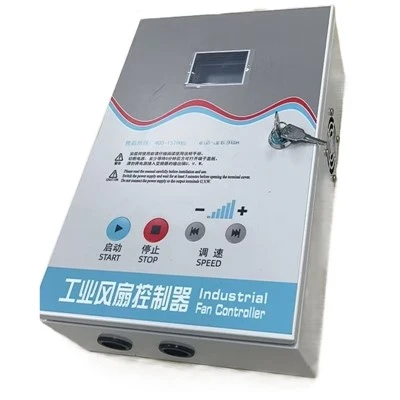
At the end of the day, I sell industrial door control boxes, but my number one priority isn’t making a quick sale—it’s making sure they work when you need them most. I’ve seen too many businesses hit with avoidable costs because someone tried to save a buck on installation. If you’re looking for a control box, and you’re ready to make sure it’s installed right the first time, reach out to our team to talk about your needs—we’ll hook you up with certified techs who know exactly how to get your door up and running safely, no headaches required.
Industrial Fan Regulator References:
- Occupational Safety and Health Administration. (2023). Power-Operated Door Safety Standards (29 CFR 1910.212, 1910.217). U.S. Department of Labor.
- International Society of Automation. (2022). Best Practices for Industrial Control Box Installation and Calibration. ISA Publications.
- National Electrical Manufacturers Association. (2021). Standards for Industrial Door Control Equipment and Wiring. NEMA Publication ICS 12-2021.
- U.S. Small Business Administration. (2023). Cost Savings vs. Risk: Industrial Equipment Installation for Small Warehouses. SBA Office of Advocacy.
Wuxi Rstar Electric Co., Ltd.
With abundant experience, we are one of the most professional industrial door control box manufacturers and suppliers in China. Welcome to wholesale bulk customized industrial door control box at competitive price from our factory. If you have any enquiry about quotation, please feel free to email us.
Address: 9th Floor, Building 9, Shengfeng Lianzhi Valley, No.67 Zhujiang Road, Xinwu District, Wuxi City
E-mail: rstarbz@163.com
WebSite: https://www.rstar-wx.com/
