If you’ve ever spent time around construction sites, factory assembly lines, or even a classic car’s engine bay, you’ve probably heard a hydraulic pump hum away in the background. And 9 times out of 10, that hum is coming from a hydraulic gear pump. As someone who’s been supplying these bad boys for over a decade, I get asked all the same questions—most of them centered around control methods. Because let’s be real, a pump’s only as good as how well you can tune it to do what you need, right? No one wants a pump that’s either underworking when you need power or wasting energy when you don’t. Hydraulic Gear Pump
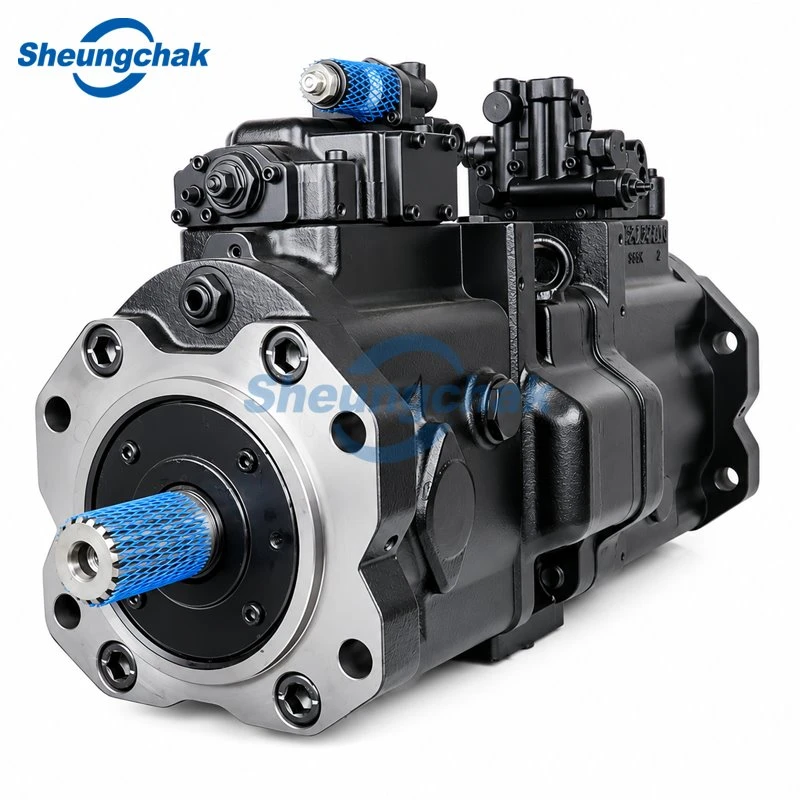
First off, let’s keep this real—gear pumps aren’t the fancy, high-tech variable pumps you’ll find in some super-precise medical or aerospace gear. They’re tough, reliable, workhorse pumps built for grunt work. That’s why their control methods are different from, say, piston pumps or vane pumps. But don’t let that fool you—they’re still super effective when you match the right control method to your application. Let’s break down the most common ones, what they do, when to use ‘em, and why I swear by each (since I’ve seen every scenario under the sun).
1. No Control (Basic, Plain Old Fixed Displacement)
Wait, hold on—isn’t this cheating? Yeah, kind of, but hear me out. Most gear pumps are fixed displacement, meaning they move the exact same volume of fluid every single rotation, no matter what. So the “control” here is just turning them on or off. You hook ‘em up to an engine or electric motor, spin ‘em, and they push fluid through the system. That’s it.
I know, I know—it sounds super simple, but this is the bread and butter for so many jobs. Think about a small farm tractor’s front-end loader, a portable power washer, or a simple conveyor system that only ever needs one level of power. You don’t need to adjust how much fluid the pump moves here—you just need it to run when you hit the switch. The only “tuning” you do is making sure the pump’s sized right for the motor and the load. Too small, and it’ll overheat; too big, and you’ll waste power.
The downside? When the system doesn’t need all that fluid (like when you’re lifting a light load with the loader), the pump has to push the extra fluid somewhere. That’s where a pressure relief valve comes in—super important for this setup. It opens up, sends the unused fluid back to the tank, and that’s when you get that annoying hum and heat. It works, but it’s not the most energy-efficient option. But for low-budget, constant-load jobs? You can’t beat it. I sell more fixed-displacement gear pumps than any other type, and half the time, customers come back saying they didn’t even know they needed more control in the first place.
2. Pressure Control (Using a Relief Valve or Unloader Valve)
Okay, so if fixed displacement’s the no-frills option, pressure control is the next step up. This is all about keeping the pump from working harder than the system needs, by managing the pressure in the line. There are two main ways to do this with gear pumps: the relief valve setup I mentioned earlier, and the unloader valve.
Let’s start with the basic relief valve. It’s a valve mounted on the pump (or in the hydraulic line) that’s set to open at a specific pressure. Once the system hits that pressure—say, 2000 PSI for a loader—it opens, bypassing the extra fluid back to the tank. The pump keeps running, but it’s just recirculating fluid instead of pushing it into the system. That cuts down on the heat a little compared to plain fixed displacement, because the pump isn’t fighting against extra pressure. The downside is, you still have that recirculation loss. But it’s cheap, easy to install, and works great for systems that only need maximum pressure occasionally. I used this setup for a customer who builds log splitters a few years back—they only need full pressure when splitting a log, so the relief valve kicks in between splits. Perfect.
The unloader valve is a bit more advanced, though. This is a valve that actually switches the pump to “no-load” when the system’s at pressure. Instead of just bypassing fluid, it connects the pump’s outlet directly to the tank, so the pump is moving zero pressure fluid, not wasting energy pushing against a closed valve. It’s way more efficient than a basic relief valve, but it’s a little pricier. I recommend this for applications that cycle on and off a lot, like a garbage truck’s lift mechanism or a auto body shop’s car lift. Those things run non-stop, so saving on electricity or fuel adds up fast. The only catch? Gear pumps can’t handle full unload cycling as well as variable pumps, so you’ve got to size the unloader properly and make sure it’s rated for the pump’s flow.
3. Flow Control (Adjusting Output to Match Demand)
Here’s where things get interesting—flow control. Wait, but hold on—gear pumps are fixed displacement, right? So how do you adjust flow? Because flow is equal to displacement times speed. Oh right! You can control the speed of the motor driving the pump, which changes how much fluid the pump pushes. That’s the key for flow control with gear pumps.
Let me explain. If your pump displaces 10 CC per revolution, and the motor’s spinning it at 1000 RPM, you get 10 LPM of flow. Crank the motor up to 2000 RPM, you get 20 LPM. Slow it down to 500 RPM, you get 5 LPM. Simple, right? But this is a game-changer for jobs that need variable flow. Think about a crane’s boom—sometimes you need to lift a heavy load slow, other times you need to move a light part of the boom fast. Or a conveyor system that needs to speed up when it’s moving empty boxes and slow down when it’s loaded with pallets.
The two main ways to adjust motor speed are with an electric variable frequency drive (VFD) for electric motors, or a hydraulic motor control valve if you’re using an engine (like on a construction machine). I’ve seen this setup work wonders for a customer who manufactures custom woodworking machinery. They used to use fixed pumps, and their saws would either move too fast and snap boards or too slow and burn them. Now, they adjust the flow to the pump via a VFD, and it’s cut their board waste by 15%—that’s huge for a small business like theirs.
The downside? You can’t spin the pump too fast—gear pumps have a maximum RPM limit, usually around 3000-5000, depending on the size. Spin it faster than that, and the gears can wear out, or cavitation kicks in (that’s when the pump sucks in air, making a loud grinding noise and damaging parts). Also, if you’re using an engine, adjusting speed can use more fuel if you’re not careful—so you have to tune it to exactly the flow you need. But overall, it’s way more efficient than basic pressure control for variable demand.
4. Directional Control (Switching Flow to Change Motion)
Wait a second—direction control isn’t really about how much fluid the pump moves, right? But hear me out. The pump doesn’t care where the fluid goes—its job is just to push it. But if you want the hydraulic cylinder or motor to move forward and backward, or a valve to open and close, you need a directional control valve, which works hand in hand with the pump’s control. That’s why it’s worth mentioning here, because it’s part of the total control system for a hydraulic gear pump setup.
Most of the time, directional control valves are solenoid-operated or manually operated. They switch the flow from the pump to one side of a cylinder or the other, so the cylinder extends or retracts. For example, a front-end loader’s joystick is connected to a directional valve that tells the pump where to send the fluid. If you push the joystick forward, the fluid goes to the cap end of the cylinder, lifting the bucket. Push it back, fluid goes to the rod end, lowering the bucket.
Now, you can pair this with any of the other control methods I talked about. If you have a fixed pump with a relief valve, the directional valve just diverts the flow. If you have a flow-controlled pump, the valve just directs that adjusted flow. The only thing to keep in mind is matching the valve’s flow rating to your pump’s output—no point in a 20 LPM pump with a 10 LPM valve, that’ll cause pressure spikes. I’ve seen that mistake more times than I can count, and it ends with a broken valve or a leaky seal.
What I Wish Everyone Knew Before Picking a Control Method
After all these years selling gear pumps, I can tell you the biggest mistake customers make is overcomplicating things. They see a fancy variable pump for $500 more and think they need it, when a basic fixed pump with a relief valve would work just fine for their needs. Let’s recap the quick guide:
- If it’s a simple, constant-load job (like a small power washer, basic conveyor), go with fixed displacement (no control except on/off).
- If it cycles between load and no-load (log splitter, car lift), use pressure control with a relief or unloader valve.
- If you need to adjust speed/flow all the time (woodworking machinery, crane hoist), go with flow control by adjusting motor speed.
- If you need to switch motion direction, add a directional control valve to whatever setup you pick.
Also, don’t sleep on proper sizing. A pump that’s too big for your system will waste energy, overheat, and die early. A pump that’s too small will never give you the power you need. I always ask customers for their maximum pressure, required flow, and what the machine is used for, and that’s how I help ‘em pick the right control method and pump. No guesswork, no overpaying, no broken parts.
Ready to Sort Out Your Hydraulic Gear Pump Control?
At the end of the day, hydraulic gear pumps are workhorses, and their control methods are built to match that toughness. They’re not as flashy as piston pumps, but they last longer, cost less, and get the job done for 90% of industrial and mobile hydraulic applications. Whether you’re a small farm needing a loader pump, a manufacturer building custom machinery, or a construction company fixing a bulldozer, I’ve seen every scenario, and I can help you pick the control method that’s right for you.

Don’t waste money on a control system that’s overkill, or skimp on parts that’ll break in a month. Reach out, tell me what you’re working on—pressure requirements, flow needs, what kind of machine it’s for—and I’ll hook you up with the right gear pump and control setup, no fluff, no hidden fees. Let’s get your system running smooth, no annoying hums, no wasted energy, just reliable power when you need it.
References
Hydraulic Pump Hydraulic Fluid Power Fundamentals, National Fluid Power Association, 2021.
Gear Pump Application and Control Guidelines, International Society of Automation, 2019.
Guangdong Sheungchak Hydraulic Technology Co., Ltd.
Guangdong Sheungchak Hydraulic Technology Co., Ltd. is one of the most professional hydraulic gear pump manufacturers and suppliers in China. We are committed to providing high quality customized products with competitive price. Please rest assured to wholesale durable hydraulic gear pump for sale here and get pricelist from our factory.
Address: Building 25, Liantang Industrial City, Shangcun Community, Gongming Subdistrict, Guangming District, Shenzhen, China
E-mail: info@hydraulicsc.com
WebSite: https://www.hydraulicsc.com/
