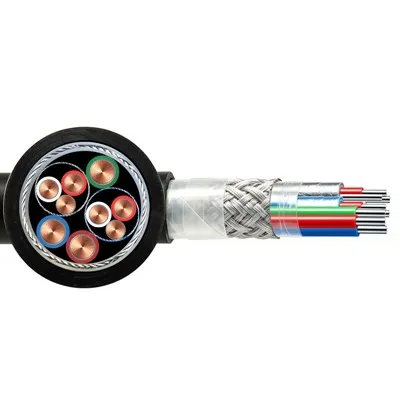
As a seasoned supplier in the cable harness assemblies industry, I’ve witnessed firsthand the remarkable evolution of materials used in this field. The choice of materials plays a pivotal role in determining the performance, durability, and overall quality of cable harnesses. In this blog, I’ll delve into some of the new materials that are revolutionizing cable harness assemblies. Cable Harness Assemblies
High – Performance Polymers
One of the most significant advancements in cable harness materials is the use of high – performance polymers. These polymers offer a range of benefits that make them ideal for cable harness applications.
Polyether Ether Ketone (PEEK)
PEEK is a high – performance thermoplastic polymer known for its excellent mechanical properties, chemical resistance, and high – temperature stability. In cable harnesses, PEEK can be used as an insulation material. It can withstand continuous operating temperatures of up to 260°C, which is crucial for applications in harsh environments such as aerospace and automotive under – the – hood areas. Its low flammability and smoke emission characteristics also make it a safe choice for use in enclosed spaces.
For example, in aerospace applications, where weight reduction is a critical factor, PEEK’s high strength – to – weight ratio allows for the design of lighter cable harnesses without sacrificing performance. Additionally, its resistance to radiation and chemicals makes it suitable for use in space and military applications.
Liquid Crystal Polymers (LCP)
LCPs are another class of high – performance polymers that have gained popularity in cable harness assemblies. They have a unique molecular structure that gives them excellent dimensional stability, high mechanical strength, and low moisture absorption.
LCPs are often used in high – frequency applications due to their low dielectric constant and loss tangent. This makes them ideal for use in data transmission cables, where signal integrity is of utmost importance. In addition, their ability to be injection – molded into complex shapes allows for the production of custom – designed cable harness components with high precision.
Nanocomposites
Nanocomposites are materials that incorporate nanoparticles into a polymer matrix. These materials offer enhanced properties compared to traditional polymers.
Carbon Nanotube (CNT) Composites
Carbon nanotubes are cylindrical carbon molecules with extraordinary mechanical, electrical, and thermal properties. When incorporated into a polymer matrix, they can significantly improve the strength, conductivity, and thermal conductivity of the resulting nanocomposite.
In cable harnesses, CNT composites can be used as conductive materials. Their high electrical conductivity allows for the transmission of high – speed signals with low resistance. Moreover, their excellent mechanical properties make the cable harnesses more resistant to bending and stretching, which is essential for applications where the cables are subject to frequent movement.
Graphene – Based Nanocomposites
Graphene is a single layer of carbon atoms arranged in a hexagonal lattice. It has exceptional electrical conductivity, mechanical strength, and thermal conductivity. Graphene – based nanocomposites can be used in cable harnesses to improve their electrical and thermal performance.
For instance, in power cables, the use of graphene – based nanocomposites can reduce the resistance and heat generation, leading to more efficient power transmission. In addition, their high mechanical strength can enhance the durability of the cable harnesses, reducing the risk of damage during installation and use.
Smart Materials
Smart materials are materials that can change their properties in response to external stimuli such as temperature, pressure, or electrical signals. These materials are opening up new possibilities for cable harness assemblies.
Shape Memory Alloys (SMAs)
Shape memory alloys are metals that can "remember" their original shape and return to it when heated or cooled. In cable harnesses, SMAs can be used in connectors. For example, a SMA – based connector can be designed to change its shape when heated, providing a secure and reliable connection. This can be particularly useful in applications where vibration or thermal expansion may cause traditional connectors to loosen.
Piezoelectric Materials
Piezoelectric materials generate an electric charge when subjected to mechanical stress and vice versa. In cable harnesses, piezoelectric materials can be used for sensing and monitoring purposes. For example, a piezoelectric sensor can be integrated into a cable harness to detect vibrations or strain. This information can then be used to predict potential failures and perform preventive maintenance.
Bio – Based Materials
With the increasing focus on sustainability, bio – based materials are becoming more popular in cable harness assemblies.
Bio – Polymers
Bio – polymers are polymers derived from renewable resources such as plants. They offer a more environmentally friendly alternative to traditional petroleum – based polymers.
For example, polylactic acid (PLA) is a bio – polymer that can be used as an insulation material in cable harnesses. It is biodegradable and has good mechanical properties. In addition, its production requires less energy compared to traditional polymers, making it a more sustainable choice.
Natural Fibers
Natural fibers such as hemp and flax can be used as reinforcement materials in cable harnesses. They are renewable, lightweight, and have good mechanical properties. Using natural fibers can reduce the environmental impact of cable harness production while also improving the overall performance of the harnesses.
Conclusion
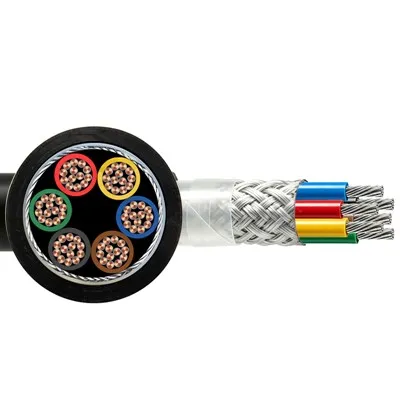
The new materials used in cable harness assemblies are transforming the industry. High – performance polymers, nanocomposites, smart materials, and bio – based materials offer a range of benefits that can improve the performance, durability, and sustainability of cable harnesses. As a cable harness assemblies supplier, I’m excited to incorporate these new materials into our products to meet the evolving needs of our customers.
Power Cable Low Voltage If you’re in the market for high – quality cable harness assemblies and are interested in exploring the benefits of these new materials, I encourage you to reach out to us. Our team of experts can work with you to design and manufacture custom cable harnesses that meet your specific requirements. We are committed to providing the best solutions and ensuring your satisfaction.
References
- "High – Performance Polymers: A Comprehensive Guide" by John Wiley & Sons
- "Nanocomposites for Advanced Applications" by Springer
- "Smart Materials and Their Applications" by Elsevier
- "Bio – Based Polymers and Composites" by CRC Press
Yangzhou Huayu Cable Co., Ltd.
Yangzhou Huayu Cable Co., Ltd. is one of the most professional cable harness assemblies manufacturers and suppliers in China, also supports customized service with low price. Please feel free to wholesale advanced cable harness assemblies made in China here from our factory. Contact us for pricelist.
Address: No. 9 Jingang Road, Yangzhou City, Jiangsu Province, China
E-mail: huayucableco@126.com
WebSite: https://www.huayucabletech.com/
