Hey everyone, it’s Jake, and for the last eight years, I’ve worked hand-in-hand with teams that rely on induction heating for everything from metal forging to hardening small automotive components. I get this question more than any other, from workshop managers at local metal fabrication shops to plant engineers at mid-sized manufacturing facilities: Can an induction heating power supply work with unstable power? And honestly, it’s such a critical one—because most industrial sites don’t have perfect, consistent power. Last month, I got a call from a shop in Ohio that’d been using a cheap imported induction supply for their bolt production. The line kept shutting down randomly, and when the owner checked the power logs, he saw 10 to 15 dips and surges a day that his old power meter couldn’t even flag. He nearly pulled out the whole system until I explained how our supplies handle variable power, and now he’s ordered two more units. Today, I want to break this down not as a textbook lecture, but as someone who’s troubleshooted this exact problem in real workshops, not just on a spec sheet. Induction Heating Power Supply

First, let’s get on the same page: what counts as unstable power for induction heating? Most people think unstable means rolling blackouts or full power outages, but that’s not the case for 90% of the facilities I work with. The common culprits are voltage sags (short drops below the rated input voltage, usually 10-30% that last a fraction of a second, often caused by another machine starting nearby), voltage surges (brief spikes above rated voltage, from lightning or utility grid switching), frequency deviations (industrial grids usually run at 50 or 60 Hz, but some older sites in remote areas can swing 2-3 Hz either way), and even harmonic distortion—those messy, extra electrical signals from old motors, welders, or other heavy equipment that can warp the clean sine wave power your induction supply needs.
Now, induction heating works on a simple principle: alternating current (AC) running through a coil creates an alternating magnetic field, which induces eddy currents in a nearby conductive material, and those eddy currents create resistance that turns into heat. The key here is that the power supply has to deliver consistent, controlled AC to that coil to get consistent, reliable heating. If the input power is all over the place, that output current can fluctuate, leading to uneven heating, wasted energy, or even damage to the supply itself. But here’s the thing—most modern induction heating power supplies aren’t just passive devices; they’re designed with built-in electronics to handle a lot of that instability, and the difference between a reliable industrial supply and a cheap imported one is exactly how well those features work.
Let’s start with the most common issue: voltage sags. I saw this first-hand at a small farm equipment shop in Iowa a couple of years ago. They had a 200 kW induction supply for heating plow shears, and every time their overhead crane moved a steel beam across the shop, the power would sag just enough for the supply to throw an error and shut down. They’d lose 15 minutes each time, which added up to a whole shift of lost production by the end of the week. We had their electrician pull the power logs, and sure enough, the sag was about 22% for 0.2 seconds. A lot of budget induction supplies have a simple circuit that trips when the input voltage drops more than 10%—that’s why they kept shutting off. Our supplies, though, have what we call “ride-through capability” built into the front-end rectifier. The rectifier converts incoming AC to DC, and we use large, high-quality capacitors to store extra DC power. When a sag hits, those capacitors kick in immediately to keep the DC voltage steady, so the supply never even sees the dip. That Iowa shop adjusted a couple of crane settings, and they haven’t had a shutdown from that issue in over two years. It sounds simple, but a lot of smaller suppliers cut corners on the size and quality of those capacitors to save money, so their ride-through is garbage.
Next up, frequency deviations. A lot of people don’t realize that not every grid is perfect. I worked with a metal stamping plant in Kentucky that’s located near a small hydroelectric dam that sometimes fluctuates output during high water seasons. Their grid frequency would swing between 58 and 62 Hz, and their old induction supply would adjust its output frequency to match, but that led to uneven heating on their stamped parts. Our supplies have a feature called “frequency regulation” that locks the internal operating frequency regardless of the input grid’s frequency. How does that work? We use a digital signal processor (DSP) that’s programmed to ignore input frequency variations and keep the coil’s resonant frequency stable. That means even if the input grid is running off-spec, the magnetic field is consistent, so every part gets the same heat. The plant engineer told us after switching that his scrap rate went down 7% in the first month—small fix, big impact.
Then there’s harmonic distortion, which is trickier because it’s not just voltage dips or spikes; it’s a messy signal that can throw off the supply’s internal sensors. A construction parts maker in Michigan called me last year because their induction supply was overheating even when it wasn’t running at full capacity. Turns out, they had a bunch of plasma cutters and welders on the same line, which were generating high levels of third and fifth harmonics. Those harmonics make the input power’s sine wave look like a lopsided hill, and if the supply doesn’t filter that out, it can cause extra current draw, overheating, and even damage to the rectifier. Our supplies come with built-in line reactors and harmonic filters that absorb those extra frequency signals before they get to the sensitive internal components. We also have a real-time power monitor that shows harmonic levels, so if a shop’s power gets too distorted, we can adjust the supply’s settings to compensate. That Michigan shop’s overheating issue went away the day we swapped in the upgraded filters, and their power bill dropped by 8% because they weren’t wasting energy fighting the distorted signal.
Now, let’s talk about what happens when the power is really unstable—not just small dips, but more frequent or severe fluctuations, or even temporary drops. No supply is perfect, right? If you have a full 2-second power outage, even the best capacitor banks can’t hold that charge forever. But most of the time, the power issues that cause the most problems are the micro-dips and minor fluctuations that happen every day, not full outages. The key difference between a reliable industrial induction supply and a consumer-grade unit is the quality of the power management system. I’ve seen shops that ran budget imports and had to replace two units a year, while our supplies have been running for 10+ years in facilities with power that’s even worse than the average site.
Wait, but let’s be honest—no two facilities have the same power issues, right? A remote metal shop in Montana that runs on a generator and a small grid will have different power stability than a plant in a city with a big utility grid. That’s why we don’t just sell a one-size-fits-all unit. Before we quote a system, we ask for 72 hours of power logs from your site. Our team will analyze those logs to see what kind of sags, surges, harmonics, or frequency issues you’re dealing with, and then adjust the power management settings on our supply to match. For example, a generator-powered shop will have more frequent voltage fluctuations than a grid-tied site, so we can tweak the rectifier and capacitor bank to handle that. We also offer optional additional ride-through kits for facilities that have more severe power issues—like shops that work in areas with frequent thunderstorms, which cause power surges. Those kits add extra capacitors to extend the ride-through time, so you can even handle slightly longer outages without shutting down.
I should also mention something that a lot of people don’t talk about: long-term reliability. Cheap induction supplies often use lower-quality components that can handle steady power, but when power fluctuates, those components wear out faster. The transistors in the inverter, for example, which create the high-frequency AC for the coil, can get extra current from a voltage spike, leading to premature failure. Our supplies use industrial-grade transistors that are rated to handle 20% more current than they’ll ever see in normal operation, and the power management system limits the amount of extra current the transistors get during power fluctuations. That means the supply lasts longer, and you don’t have to replace expensive parts every couple of years. I had a customer in Texas whose shop is near a substation that has surges every time a train passes by. They’ve had our 150 kW supply for seven years now, and they haven’t replaced a single internal part. The original budget supply they had before only lasted 18 months before the transistors burned out from those repeated surges.
Now, let’s address a common myth: some people think you need an external power conditioner to make an induction supply work with unstable power. While power conditioners can help in some cases, most of the time, a good induction supply’s built-in system is enough. External conditioners add extra cost, take up space, and can even reduce efficiency because they waste energy converting power. Our supplies are designed to meet industrial power standards—like IEC 61000-4, which covers immunity to voltage dips and surges—so they’re tested to handle the same kinds of fluctuations that an external conditioner would fix. That’s not to say external conditioners are never needed; if you have extremely unstable power, like a remote site with a small generator that’s poorly regulated, we can recommend the right combination of supply and conditioner to get the best result without overpaying.
I want to make this real, so let’s use a recent example. Last quarter, we worked with a forge in Pennsylvania that was dealing with power so unstable, their old supply had a 40% downtime rate. They had 30-40 voltage sags a day that triggered the supply’s trip, and harmonic levels that were 15% above the allowed limit. We analyzed their power logs, adjusted our supply’s frequency regulation settings, added our standard line filters, and even upgraded the ride-through capacitors. After installing, their downtime dropped to less than 1%—that’s a loss of 15 minutes a month instead of 8 hours a day. They also told us their heating consistency improved, so they reduced their scrap rate by 12% because every forging part was heated evenly. That’s the kind of result that matters, not just numbers on a spec sheet.
So, to circle back to the original question: Can an induction heating power supply work with unstable power? The short answer is yes, but only if it’s designed for industrial use with robust power management features. Cheap, imported supplies that cut corners on capacitors, filters, and power regulation will not handle unstable power well—they’ll trip, overheat, and break down fast. But a quality induction supply built with reliable components, real-time power monitoring, and adjustable ride-through and filtering can handle the kind of power fluctuations that 90% of industrial sites deal with every single day. It’s not magic; it’s engineering that accounts for real-world conditions, not just lab tests with perfect power.
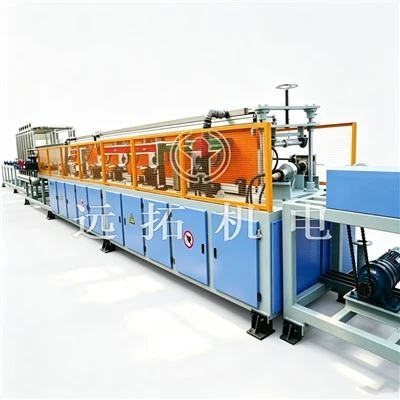
If you’re dealing with inconsistent power and tired of induction supplies that shut down randomly, waste energy, or break down too often, let’s talk. We can analyze your power data, walk you through the best options for your specific site and production needs, and make sure you get a system that works for your power, not just a generic system. You don’t have to deal with lost production from power dips or uneven heating because of bad power—let’s find a solution that fits your operation.
Induction Heating Power Supply References
IEC 61000-4-11, Electromagnetic compatibility (EMC) – Part 4-11: Testing and measurement techniques – Voltage dips, short interruptions and voltage variations immunity tests
IEC 61000-4-12, Electromagnetic compatibility (EMC) – Part 4-12: Testing and measurement techniques – Waveform distortion immunity test
Induction Heating: Principles and Applications, ASM International, 2013
Power Quality Handbook, EPRI, 2019
Hebei Yuantuo Electromechanical Equipment Manufacturing Co., Ltd.
As one of the most professional manufacturers and suppliers of induction heating power supply in China, our products have good reputation in the market. Please rest assured to buy advanced equipment made in China here and get quotation from our factory. Customized orders are welcome.
Address: Yanshan Street West and Jialingjiang Road North, Economic and Technological Development Zone, Wuqiao County, Cangzhou City, Hebei Province, China
E-mail: yuantuotech01@gmail.com
WebSite: https://www.yuantuoem.com/
