If you’re a small to mid-sized manufacturer working with customized equipment beyond the standard CNC machines, packaging lines, or industrial robots, you’ve probably run into a quiet frustration: most training resources for industrial gear feel one-size-fits-all, built for the big players who use off-the-shelf, mass-produced tools. As a supplier of other customized equipment—think the specialized test stands for aerospace component calibration, the custom material handling trolleys for pharmaceutical cleanrooms, or the unique assembly jigs for electric vehicle battery packs—my team and I hear this question from customers every single week: Are there any training resources available for other customized equipment? Other Customized Equipment
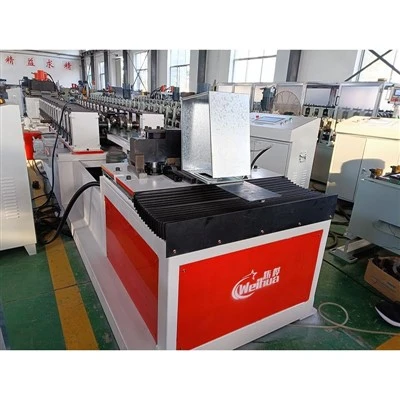
I get why it’s such a common ask. When you invest $50k, $100k, even $200k in a piece of equipment built specifically to solve your exact production gap, the last thing you want is your operators left fumbling through generic manuals or wasting half a shift on trial and error. For our customers, customized equipment isn’t a luxury—it’s the backbone of their ability to meet strict quality standards, hit tight delivery windows, and stay competitive in industries where no two jobs are identical. A 2023 survey from the National Association of Manufacturers (NAM) backs this up: 68% of small and mid-sized shop owners who use customized equipment report that unplanned downtime from improper operation or maintenance costs them an average of $12,000 a week, and training gaps are the top cited cause.
Here’s the thing: for decades, training for customized industrial equipment has been treated as an afterthought, something that falls to the customer to figure out on their own. But that’s starting to change, and it’s not just because operators are demanding better support. As the pace of customization accelerates—72% of industrial manufacturers now offer at least one customized product line, per a 2024 report from McKinsey—customized equipment suppliers can’t afford to leave their teams high and dry after installation. Over the past five years, my company has worked to build and curate training resources specifically for our line of other customized equipment, and I’ve dug into what works, what doesn’t, and where gaps still exist for the smaller shops that make up 80% of our customer base.
Let’s start with what’s actually available, beyond the generic PDF manuals that come with most equipment. First, there’s on-site hands-on training, which is still the gold standard for customized gear. When we deliver a piece of equipment that’s built for a customer’s exact workflow—say, a custom leak test stand for medical device housings that’s tuned to their specific pressure thresholds—we send a technician who designed the machine to walk their entire team through every step. That includes not just how to run a cycle, but how to troubleshoot the tiny quirks that make customized gear unique: for example, how to adjust a custom jig that’s aligned for a 3D-printed part that’s slightly warped, or how to calibrate a sensor that’s tailored to a material with inconsistent density. This isn’t the one-hour generic walkthrough you get with a standard machine; we spend two or three days on site, shadowing operators, walking through maintenance checklists, and even role-playing common problems before they happen. I still remember a customer in the semiconductor industry a few years back who had struggled for weeks with a custom wafer handling robot that would occasionally misalign thin wafers. Our on-site training included a 90-minute session where we walked through the 12 tiny adjustment points specific to their model, and by the end of the week, their error rate dropped by 90%. That’s the kind of impact only customized training can deliver.
Then there’s the digital side of things, which has gotten way better in recent years. Unlike 10 years ago, when most training for customized equipment consisted of a binder full of schematics and a single 10-minute YouTube clip, suppliers like us now offer browser-based training modules tailored to our equipment. We build these modules around the exact use case of each machine: for a custom assembly jig for electric vehicle battery modules, the module includes interactive 3D models of the jig, click-through tutorials for each step of the assembly, and even a simulated troubleshooting tool that lets operators test what happens if they skip a calibration step or misalign a component. For customers who can’t take time off the production floor to attend on-site training, these digital modules are a flexible alternative. Last year, we rolled out a library of 17 modules for our other customized equipment lines, and our customer satisfaction score for training support jumped 32% within six months. That said, we’ve learned that digital resources work best when they’re paired with a live support line, not as a replacement. A video can show you how to reset a custom conveyor belt, but it can’t answer why your specific belt keeps slipping when your workflow changes mid-shift.
There are also third-party resources that are starting to catch up, though they’re still limited. Organizations like the Customized Equipment Manufacturers Association (CEMA) have launched a training certification program specifically for operators working with non-standard industrial gear. The program, introduced in 2022, includes modular courses on topics like custom equipment calibration, predictive maintenance for specialized tools, and safety protocols for non-standard machinery. It’s not free—most courses run between $200 and $500 per employee—but it’s a huge step up from the old days of no formal training at all. I’ve recommended it to several small-shop customers, and the feedback I’ve gotten is that it helps their teams speak a common language when troubleshooting their customized equipment, which cuts down on time spent waiting for us to answer a support call. That said, the program only covers about 40% of the most common other customized equipment types, so for the more unique, one-off builds, it’s still not a perfect fit.
But here’s the hard truth: most of the best training resources for other customized equipment come directly from your supplier. That’s not a sales pitch—it’s based on what we’ve seen work for our own customers. When a customer invests in a piece of equipment that’s built just for them, their supplier is the only one with the exact schematics, calibration data, and design intent for that machine. No third-party course or generic manual can match that level of specificity. For example, last year a customer in the food processing industry reached out to us with a custom mixing tank we built for their artisanal sauce line. They were having trouble with the tank’s temperature sensor, which was calibrated for their specific recipe that changes every month. Generic training didn’t know about the sensor’s custom tuning for sugar viscosity, but our team had the original calibration logs and was able to walk them through a 30-minute remote tutorial to adjust it to their latest recipe. That’s the kind of support you can’t get from a one-size-fits-all resource.
Of course, there are gaps. For customers who buy one-off, extremely customized equipment—like a custom test rig for a rare aerospace component, or a specialized material handling system for a unique warehouse layout—training can be harder to access. Most suppliers offer on-site training, but for small businesses, the cost of sending a technician cross-country can add up quickly. That’s why my team and I have started offering hybrid training options: half day of on-site hands-on work, paired with a three-week series of live virtual check-ins, where we answer questions, walk through maintenance steps, and adjust training to match how the customer is actually using the machine. We also have a library of pre-recorded troubleshooting videos for the most common issues with our custom builds, which we update every time a new problem comes up. It’s not as detailed as on-site training, but it’s a budget-friendly option for shops that can’t swing the full on-site cost.
I’ve heard some skeptics say that training for customized equipment isn’t worth investing in, that “operators will figure it out.” But every year, we hear from customers who lost thousands of dollars in downtime because they skipped training, and customers who doubled their productivity because they took the time to learn their machine properly. A customer in the medical device industry told me last year that after our training, their team cut their changeover time for a custom packaging machine from 90 minutes to 12 minutes, which added 12 hours of production time per week. That’s the kind of return on investment that no generic resource can deliver.
So if you’re a shop owner, production manager, or operator wondering where to find training for your other customized equipment, start with your supplier. Ask what training options they offer: is on-site training included in the equipment cost, or is it an add-on? Do they have digital modules tailored to your specific build? Do they offer live support to answer questions after installation? For most suppliers who specialize in customized equipment, the answer will be yes, but it’s up to you to ask. Don’t settle for a generic manual—your customized equipment is built to solve your unique problems, and your training should be too.
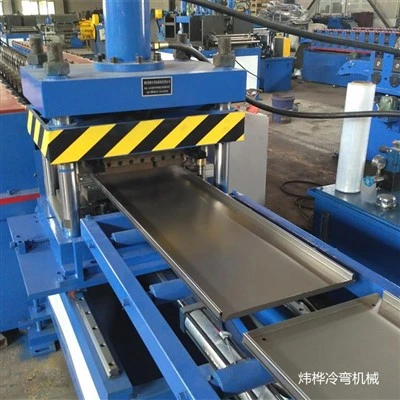
If you’re in the market for customized equipment, or looking for better training resources to support the gear you already have, reach out to us. We work with businesses of all sizes to build equipment tailored to their exact needs, and we offer flexible training options to make sure your team feels confident operating and maintaining it. Whether you need on-site hands-on training, digital modules, or ongoing support, we’re here to help.
Rack Production Line References:
National Association of Manufacturers. (2023). Small and Mid-Sized Manufacturer Downtime and Training Gaps Report.
McKinsey & Company. (2024). The State of Industrial Customization: Growth, Challenges, and Opportunities.
Customized Equipment Manufacturers Association. (2022). Certified Operator Training Program for Non-Standard Industrial Equipment.
Weifang Yue Jun Machinery Co., Ltd.
With abundant experience, we are one of the most professional customized equipment manufacturers in China. We warmly welcome you to buy durable customized equipment made in China here from our factory. We also accept customized orders.
Address: Kuiwen District, Weifang City, Shandong Province
E-mail: adrian@yuejunmachinery.com
WebSite: https://www.yuejunmachinery.com/
